
Mexican immigrants are revitalizing Philadelphia and its suburbs

At the height of mass cross-border migration late in the 20th century, immigrants, particularly Mexicans, settled well beyond the popular destinations of America’s Sun Belt. They went to places with no significant history of immigrant settlement.
Philadelphia became an attractive destination for many new migrants as a sanctuary city. Over time, Mexicans’ experiences of migration and settlement in Philadelphia expanded into the city’s suburbs, including Norristown.
Latine residents are now close to 40% of Norristown’s population, and within decades will be a majority of local public school students. A 2022 Axios report found that immigrants in the U.S. have been gravitating toward suburban communities outside Philadelphia, including Montgomery County, to find affordable housing and support growing businesses.
Money initially motivated the immigrants’ push toward smaller cities, where housing, jobs and education are more accessible than in the metropolis.A byproduct of that trend is that the media change their tone when Latino immigrants settle in, says Jennifer Rodriguez, CEO of the Greater Philadelphia Hispanic Chamber of Commerce. Her business organization supports Latino entrepreneurs through workshops, robust resources that help start-ups, and a community network.
“The most rewarding part of my job is seeing what we always say, that this country is a nation built by immigrants,” Rodriguez said.
“Immigrants, particularly in Philadelphia, have taken and have invested in locations that were seen as not having a lot of opportunity, as not being desirable places to be necessarily,” Rodriguez said. “And really seeing the promise of these places, and revitalizing them to the point that these are desirable communities now.”
When Canada, Mexico and the United States approved NAFTA — the North American Free Trade Agreement — in 1994, many Mexicans were suffering because a slumping national economy was cutting into incomes for average workers. Many Mexicans left home, particularly in rural regions such as Puebla, and came to the United States in large numbers, aiming to establish their own wealth in the United States.
Their relatively low wages boosted the middle and upper classes through their labor, and migrants began to revitalize blighted neighborhoods, taking over from proprietors who had left the area.
The post-NAFTA migration brought migrants to Philadelphia suburbs, with the largest number arriving in Norristown.
In his 2022 book, “The Sanctuary City: Immigrant, Refugee, and Receiving Communities in Postindustrial Philadelphia,” Domenic Vitiello tells an origin story: An Italian-American man went to Acapulco on vacation, fell in love with a woman, and brought her back with him to Norristown. She then invited her friends and family to town, creating a snowball effect of people coming to the community for work.
The consulate steps up
By 2000, the U.S. Census reported that about 3,000 people of Latin American origin — mostly Mexicans, but also Puerto Ricans — lived in Norristown. By 2010, the number had risen to 10,000. The Mexican arrivals reversed the population loss the town had experienced since the 1970s, when factories and mills left.
However, many migrants had to pay coyotes — human smugglers — to bring them across the Mexican-American border and did not have legal documentation to work, reside or learn in America. The Consulate of Mexico began to adapt to the city’s progressive sanctuary city laws by providing many arrivals with various forms of documentation, resources for education, finance, and language accessibility needs, among others.
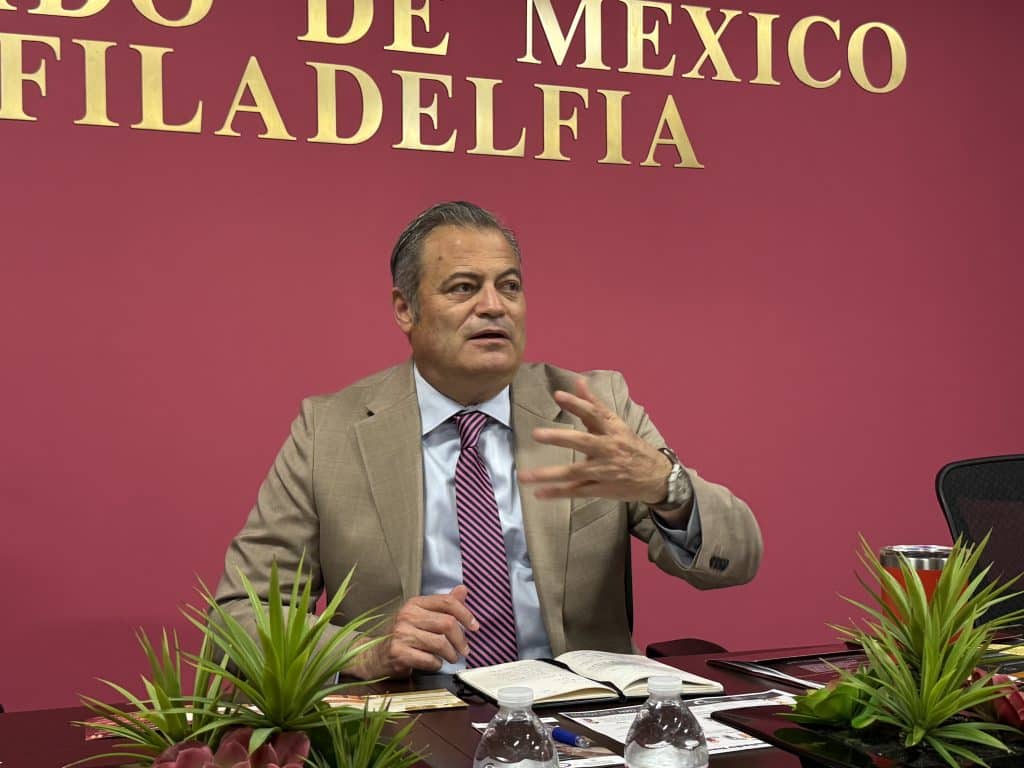
“It is very important to us to provide support to the Mexican community,” said Carlos G. Obrador Garrido Cuesta, the head consul of the Consulate of Mexico in Philadelphia. “We do this across several areas: immigration, human rights, criminal law, family law, labor law, and administrative matters. This forms the core of our work.”
“We also provide consular services — specifically documentation — such as issuing Mexican passports and consular ID cards. We also handle civil registry services; for instance, Mexican nationals whose children were born here can bring them to the consulate to register them as children of Mexican nationals, thereby obtaining dual nationality,” the head consul said.
“But, we also specifically serve the most vulnerable members of our community: undocumented individuals. While the number of undocumented people from Mexico is decreasing, estimates suggest there are around 4 million of them across the United States. Here in our area, I would say there are fewer than 100,000. Regardless, it is a very important — fundamental — undertaking.”
A division of the consulate, the Department of Communities, works closely with the immigrant community.
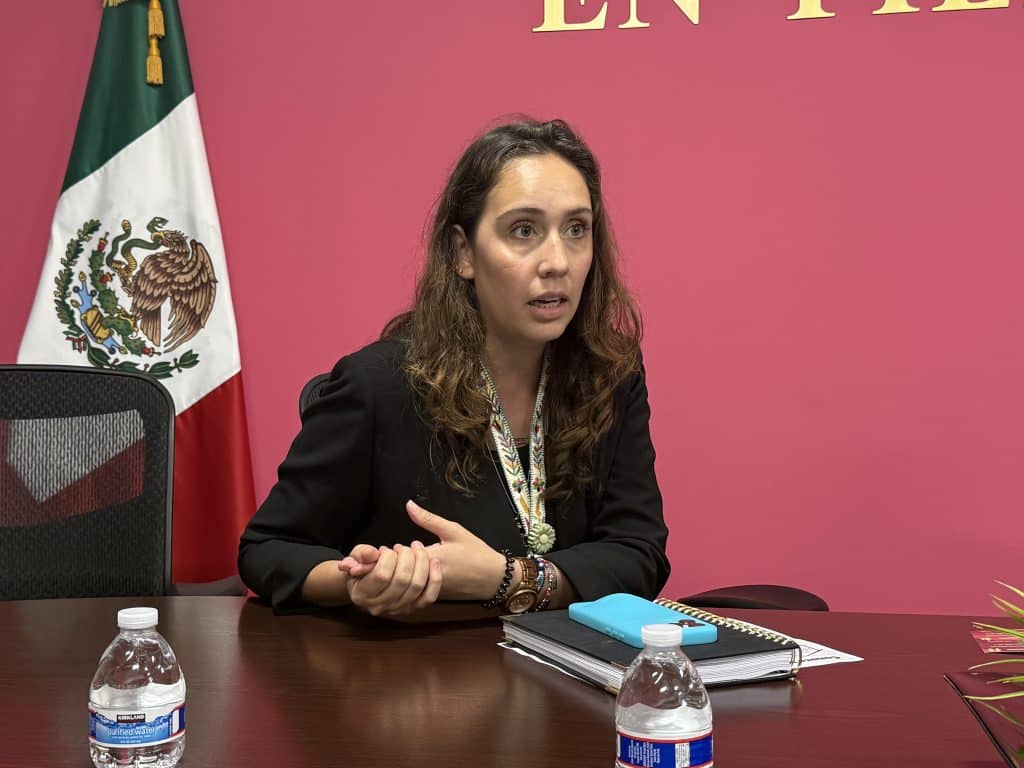
“In the Department of Communities, we have three areas we focus on: health, education and finance,” said Tamara Contreras, the consulate’s community manager. “In these three areas, we seek out organizations that provide services to the community in Spanish and offer them workshops and talks; we also organize bilingual weeks where institutions come to offer services and inform the community about what they are doing for them.”
Laying the groundwork
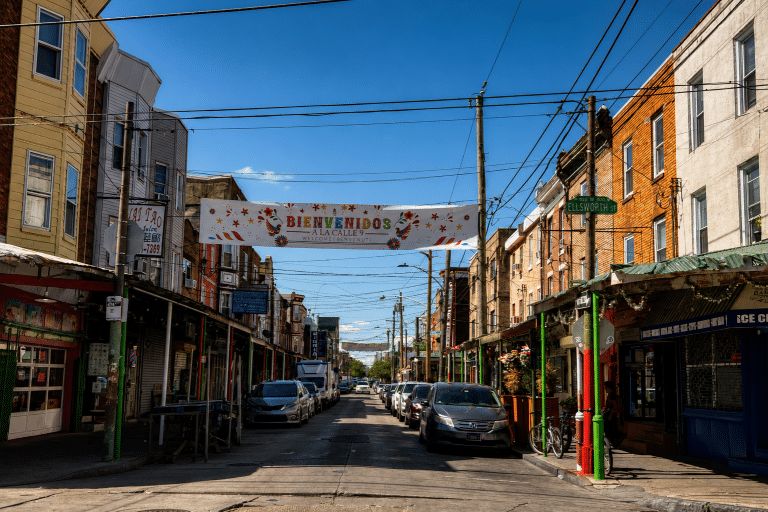
Much like Norristown, Philadelphia’s Mexican population, dubbed “Puebladelphia,” has taken the once-blighted Italian market on 9th Street and created a home for itself.
The story goes that Efren Tellez, a farmer from San Mateo Ozolco, came to the states in 1995 and settled in Camden, New Jersey. He walked aimlessly across the Ben Franklin Bridge and stumbled upon a restaurant sign: “Tequilas Restaurant.” David Suro owned the upscale Mexican restaurant, and gave Tellez a job as a dishwasher.
Tellez moved to a cheap room in South Philadelphia and began to encourage his friends to join him. By 2005, thousands of immigrants had settled in Philadelphia. The first arrivals were mostly men of working age, including some teenagers.They often lived together in large numbers so they could save money to send back home, and traveled frequently between their native home and their new home to help bring their family and settle more permanently.
That trend echoed the communal resilience and development of Italian immigrants in the area a century before — and, ironically, the same flag colors.
In that way, Mexicans helped lay the groundwork for other Latin American immigrants to settle in and around Philadelphia — and to combat the racism the community faces as fear of deportation rises in President Trump’s second term.
Businesses thrive and provide groceries, restaurants, law firms, murals, cafes and much more. Walk across the Bella Vista corridor, and it’s impossible to miss the vibrancy and camaraderie.
“Our community is incredibly resilient,” said the Consul. “The strength of migrants moves mountains. We are a community that adapts and knows how to forge ahead despite any challenge or difficult situation. We are the people who get the job done.”
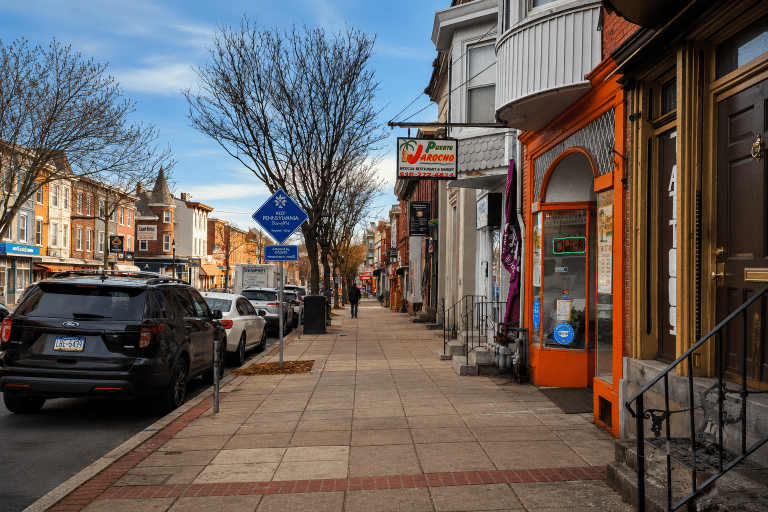
This article, produced by 2Puntos in collaboration with Metro Philadelphia, is part of a 10‑part series exploring two of Pennsylvania’s most diverse areas — South Philadelphia and Norristown — both home to vibrant and growing Latino communities. The series will be published across both outlets and released monthly.